
Our Standards
Most lock jobs follow the same few stages, whether the work is a rekey, a new deadbolt or a lock that has stopped turning. Knowing them ahead of time takes the guesswork out of the visit.
The Stages of a Lock Job
A careful locksmith works the same way on a single front door as on a whole building: find out what the lock is doing, look at it in person, do the work, prove that it works, then hand it back. Each stage has its own job.
The First Call
The call is where the job starts. Fernando Gonzalez, who manages the shop, asks customers to describe what the lock is doing: whether it sticks, spins, or refuses the key. Those three words point in different directions. A key that sticks often means worn pins or grit in the keyway. A cylinder that spins without moving the bolt usually means a broken cam or tailpiece. A key that will not go in, or goes in and will not turn, can be a bent key, debris in the keyway or the wrong key for that cylinder.
Photos help even more. A picture of the whole door and a close one of the lock face, sent ahead to schedule@springwellslocksmith.com, show the brand, the finish and the way the door sits in its frame, so the right parts come along.
Arrival and a Look at the Lock
A locksmith usually starts by working the lock as it is: the key in and out, the bolt thrown with the door open and again with it shut. That second test matters. A deadbolt that slides easily with the door open but drags with it closed is not a lock problem at all. The door has sagged or the strike plate has drifted out of line, and the fix lives in the hinges or the frame.
If the trouble is inside the lock, the trim comes off so the cylinder, the tailpiece and the cam can be seen. The names of those parts are in the lock glossary, which helps when the locksmith walks you through what has worn.
The Work Itself
What happens next depends on what the look turned up. A cylinder might be rekeyed to new keys, a tired lock taken apart and its worn parts replaced, or the whole lock swapped for new hardware. A new deadbolt means boring the door at the right backset, cutting the pocket for the latch plate, and setting the strike so the bolt lands square in it.
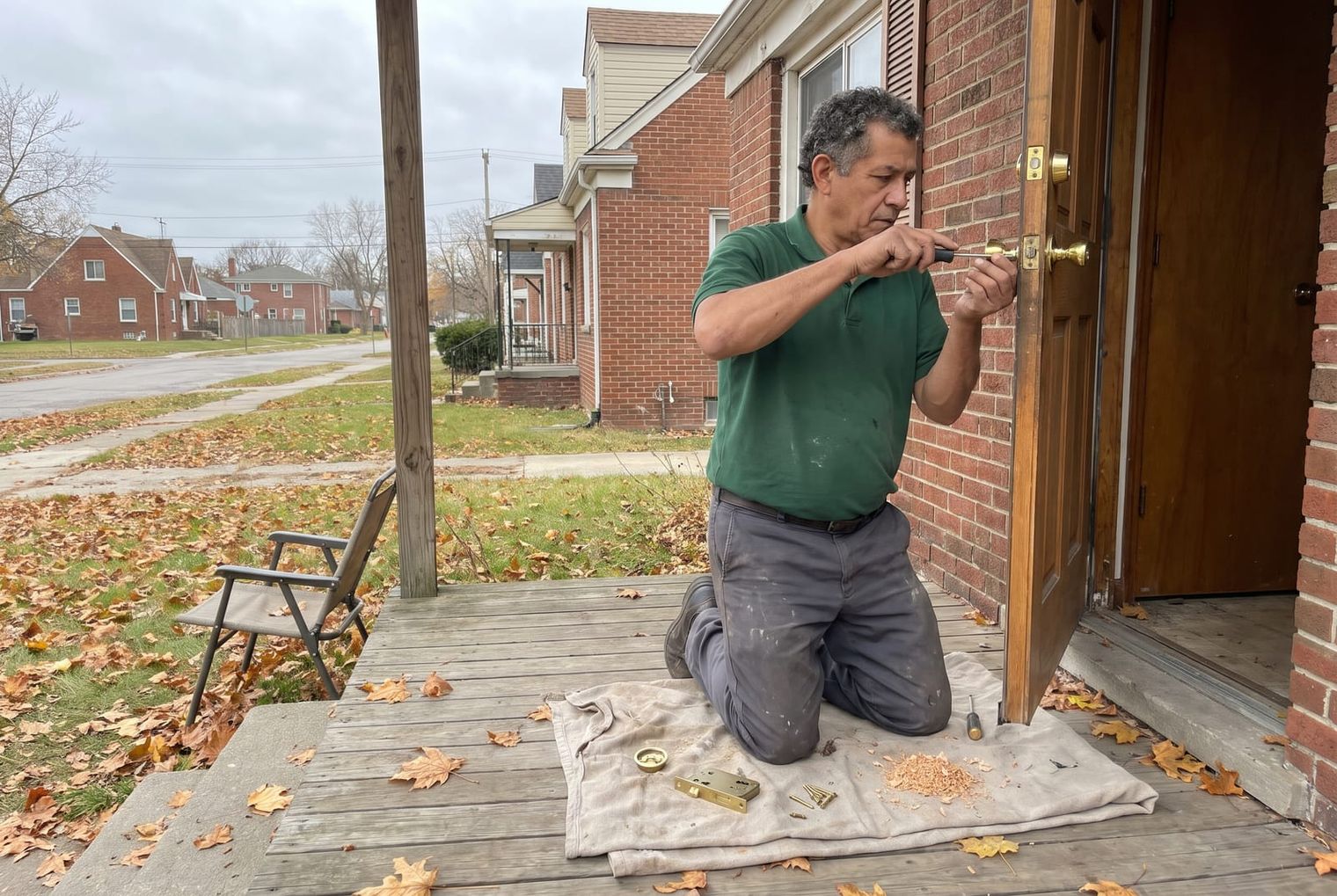
Good lock work is mostly patience with small parts. Parts go back in the order they came out, screws are snugged rather than forced, and a strike plate is set deep enough that the door closes without a shove. Rushed work shows up weeks later as a loose knob or a bolt that only throws with the door pulled tight.
Testing the Keys and the Lock
Before the tools go back in the bag, the usual practice in the trade is to try every key in every lock it is meant to open. Each key should slide in smoothly, turn without a hitch and come back out without a tug. A locksmith runs each one several times, from inside and outside where the lock has two sides.
Then the door gets the same test as at the start: the deadbolt thrown with the door shut, out to its full throw, with no lifting or pushing on the door to make it go. A spring latch should catch on its own when the door swings closed. A lock that only works with the door held just so is not finished.
Finishing Up
At the end of a job, a locksmith usually goes over what was done: which locks were changed or rekeyed, how many keys were cut, and anything else on the door worth watching, such as a loose hinge or a strike plate working out of the frame. It is a good moment to count the keys and decide who gets one. How payment works is one of the things to settle on the first call, so the end of the visit holds no surprises.
Hiring a Locksmith for the First Time
What should I ask when I call a locksmith?
Ask what the work usually involves for a lock like yours, and whether the lock can be rekeyed or repaired rather than replaced. Ask how payment works and what the locksmith will need from you at the door.
Listen for plain answers. A locksmith who asks questions back about the door, the lock and the keys is already getting ready to do the job right.
What does a locksmith need to know about my home?
The type of door (wood, steel, fiberglass, a glass door or a storm door in front of the entry), how many locks are on it, and the brand if you can find it on the lock face or the head of the key. Say whether you own the home or rent it.
Renters should know that many leases ask for the landlord’s say before a lock is changed or rekeyed, so it pays to have that settled before the visit.
What if I am not sure what I need?
Describe what the lock does and when it started. A key that sticks, a deadbolt that has to be pushed, a knob that turns without opening the door: each points to a different fix. Reading through the signs a lock is failing before the call helps, and the locksmith can sort out the rest in person.
Getting the Door Ready for the Visit
A little preparation saves time at the door. The shop asks for one thing first: a clear path to the door, so there is room to kneel, lay out tools and swing the door wide. The rest is a short list.
- Clear a path to the door. Move mats, planters, bikes and boxes out of the way, inside and out.
- Gather the keys you have. Every key for the locks involved, the spare in the kitchen drawer included, so each one can be tried or matched.
- Note the lock brand. It is usually stamped on the lock face, on the latch plate or on the head of the key.
- Secure pets. The door may stand open for a while, and a curious dog is hard to work around.
- Have ID ready. Keep a photo ID close at hand, since a locksmith may ask for it before working on the locks of a home.
- Note how many doors are involved. Count the front, back, side and garage entries you want looked at, so the right number of cylinders and keys come along.
Visit Preparation Checklist
Tick each item that is done, then press Check My List to see what is left.
When the list is done, call the shop or Schedule an Estimate with the photos and a few words about what the lock is doing.