
Lock Care Guide
A lock is a small machine with one face out in the weather. Grit, damp, cold and a door that moves with the seasons wear it down long before the pins give out, and a few minutes of care each season keeps keys turning the way they should.
Dry Lubricant for Pin-Tumbler Locks
Inside a pin-tumbler cylinder, small brass pins ride on springs in a row of chambers, and the key lifts each one to the shear line so the plug can turn. Those pins need to slide, not stick. The right lubricant is a dry one: powdered graphite, or a PTFE dry lube that goes on wet and dries to a thin film.
Oily sprays are the wrong choice for a keyway. They feel smooth for a week, then hold every bit of dust and grit that rides in on the key, and in cold weather the film thickens until the pins drag. A lock that has been oiled should be flushed with a lock cleaner before a dry lube goes in.
- Wipe the key clean.
- Give the keyway a short puff of graphite or a quick shot of PTFE dry lube.
- Slide the key in and out ten times, then turn it fully both ways a few times.
- Wipe the key again, and wipe any dust off the lock face.
Once or twice a year is plenty for most entry locks. More lubricant will not fix a lock that still drags after that; the pins, springs or cam inside are worn.
Questions About Lock Lubricants
Can I use a household oil spray in a lock?
It will loosen a stiff lock for a short while, but the oil stays wet and collects grit in the keyway and around the pins. Over a season or two that paste wears the pins and leaves the lock stiffer than before. Use a dry lube instead, and flush out any oil with a lock cleaner first.
Is graphite right for every lock?
Graphite suits the pin-tumbler cylinders on house doors. Use it sparingly, since a heavy dose can cake in a damp keyway. Keypad and smart locks often name the lubricant to use in their instructions, and that advice comes first. For a latch bolt or a deadbolt, a light PTFE spray works better than powder.
Winter: Cold, Ice and Stiff Keys
A Detroit winter is where locks show their age. Water from sleet or melting snow runs into a keyway, freezes around the pins, and the key either stops at the face of the lock or slides in and stays put.
For a frozen lock, spray a lock de-icer made for the job into the keyway, or warm the metal blade of the key in your hand, ease it in and let it sit a moment before turning. A hair dryer aimed at the lock face works on a door within reach of an outlet. Never pour boiling water on a lock. It thaws the outside, runs deep into the cylinder and freezes again harder than before. And never force a frozen key: a key twisted hard in a frozen plug can bend or snap off inside.
Cold also changes how a door sits. A steel entry door can bow slightly when its outside face is far colder than the inside, and a deadbolt that slid easily in autumn may drag on the strike. A key that stays stiff after the lock has thawed is one of the signs of a worn lock, and no amount of de-icer will cure it.
Spring: Doors That Shift After the Thaw
Freeze and thaw move the ground under a house, and the house follows. By spring a door frame can rack a little out of square, a door can sag on its hinges, and a deadbolt that met the strike cleanly in autumn starts to rub the top or bottom of the opening.
Check it by closing the door and throwing the bolt slowly. It should slide to its full length with no push or lift on the door. If it rubs, start with the hinges: tighten the screws, and on the top hinge, a longer screw that bites into the framing behind the jamb often pulls a sagging door back up. If the bolt still catches, the strike plate may need its opening widened or the plate moved.
Do not live with a bolt that has to be forced. Every hard throw strains the cam and the tailpiece, and that wear ends with a cam that no longer catches the bolt. When the hinges and the strike will not clear it, the lock itself may need repair or replacement.
Summer: Humidity and Swollen Doors
Humid summer air does the opposite of winter. Wooden doors take on moisture and swell, and a latch that clicked shut in March now binds against the strike, or the door has to be shouldered closed before the deadbolt will turn.
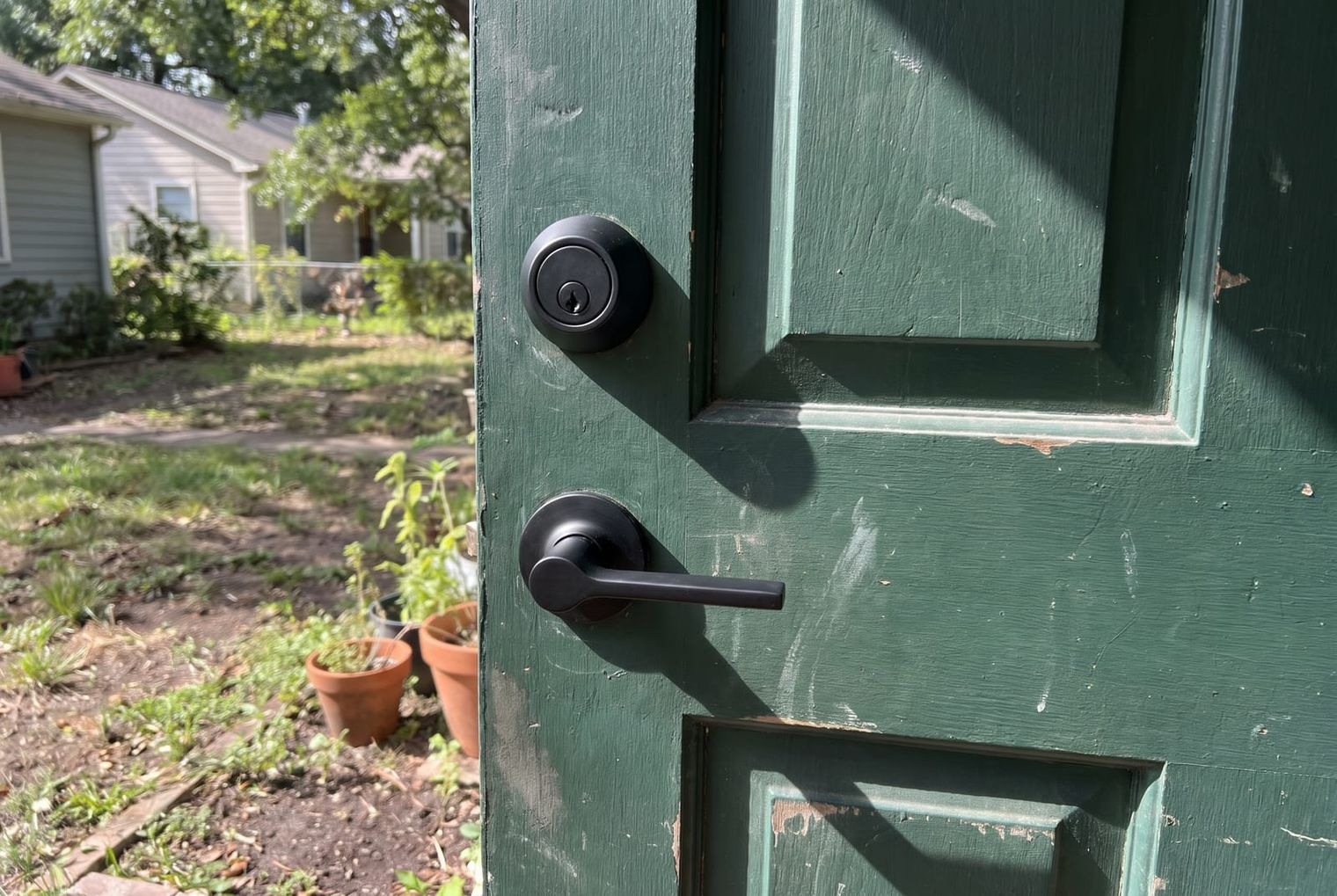
Before planing a swollen door, wait. Wood shaved in the dampest month shrinks back in winter and leaves a gap that lets in cold air and lets the latch rattle. A tightened hinge screw, a strike plate shifted a sixteenth of an inch, or a light film of dry lube on the latch bolt often clears the bind.
Summer is also the season for a quick look at the doors that get less attention: the back door, the side door to the garage, the gate. Dust and pollen settle in keyways that rarely see a key, and a puff of dry lube with a few turns of the key keeps them ready.
Autumn: Checks Before the Cold Sets In
Autumn is the time to fix what winter will make worse. Go door by door:
- Throw each deadbolt with the door shut. It should travel its full length into the strike, about an inch on most house deadbolts, and hold firm when you push on the door.
- Check the storm-door latches on older homes. A storm door that will not latch slams in the wind and wears out its closer and its hinges.
- Look at new weatherstripping. A thick new strip can push the door off its strike, so the latch no longer catches unless the door is slammed.
- Account for the spare keys. Know who holds a copy: a neighbor, a dog walker, a contractor from last summer.
If the count does not add up, or a key went missing with a former tenant or roommate, rekeying the locks puts the old keys out of use.
Worn Keys and Keypad Batteries
Keys wear too. The cuts round over, the tip shortens, and a worn key can still turn a worn lock while failing in a fresh one. When a key starts to need jiggling, try a spare in the same lock: if the spare turns smoothly, the key is the problem, not the lock.
Copy from an original key, never a copy of a copy. Every copy drifts a little from the original cuts, and a copy made from a worn copy carries both errors forward. Keep one original spare in a drawer as the pattern whenever duplicate keys are cut.
Keypad and smart locks run on batteries, and alkaline batteries lose strength in the cold. Change them on a schedule, each autumn for instance, rather than waiting for the low-battery warning. Many keypad deadbolts carry a keyed cylinder as a backup, and some models wake up when a 9-volt battery is held to contacts on the outside. Know which kind is on your door, and where its key is, before the batteries run down.