
Recent Work
Hardware from the shop’s own jobs: locks on house doors, and the locks, bars and cylinders on the doors, gates and cabinets of local businesses. Each photo shows the hardware as it looked on the job.
Residential Deadbolts and Knob Locks
Two doors from residential work: a satin nickel keypad deadbolt on a tan door, its touch panel set over a keyed cylinder in one plate; and a brass knob lock on a white door after a forced-entry attempt, its outer shell torn open and its cylinder chewed up.
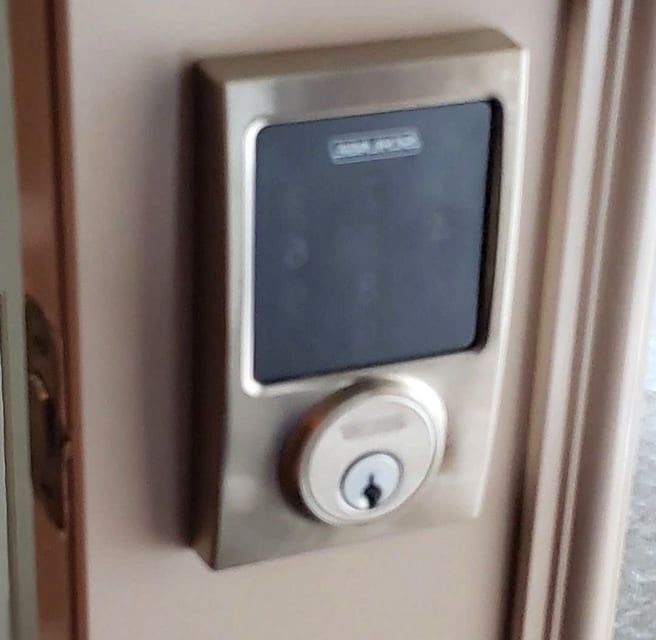
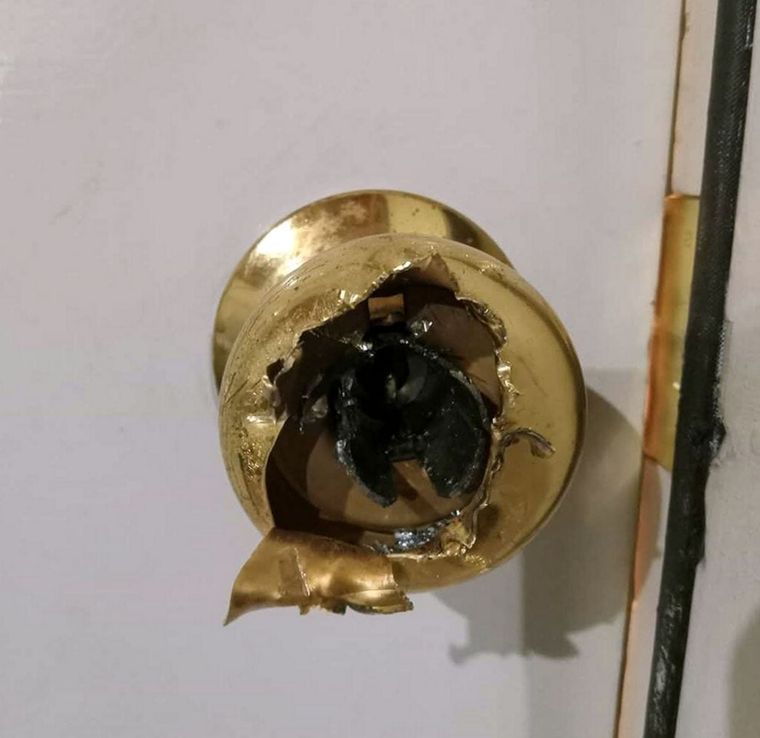
The two sit at opposite ends of house work. A keypad deadbolt opens with a code for everyday comings and goings, and its key cylinder stays ready for the day the batteries give out. Most fit the same bore hole as an ordinary deadbolt, which makes them a common swap on an existing door. They still need the care any deadbolt does in fitting: the bolt has to throw fully into the strike without a push on the door, or a motorized model strains against it and runs its batteries down early.
The knob lock shows what a forced-entry attempt leaves behind. After damage like this, the cylinder, the latch and often the strike all need a close look, and the door may need more than a new knob. What that work involves is part of lock repair and replacement.
Business Doors, Exit Devices and Cabinet Locks
Commercial hardware from business jobs: a stainless lock housing with a keyed cylinder and a long pull handle on a frosted glass office door; an aluminum storefront door with a long horizontal push bar, the shop behind it still under renovation; a panic bar across a steel-panel gate in a parking garage fence; and two round cam locks in an orange office cabinet door beside its steel bar pull.
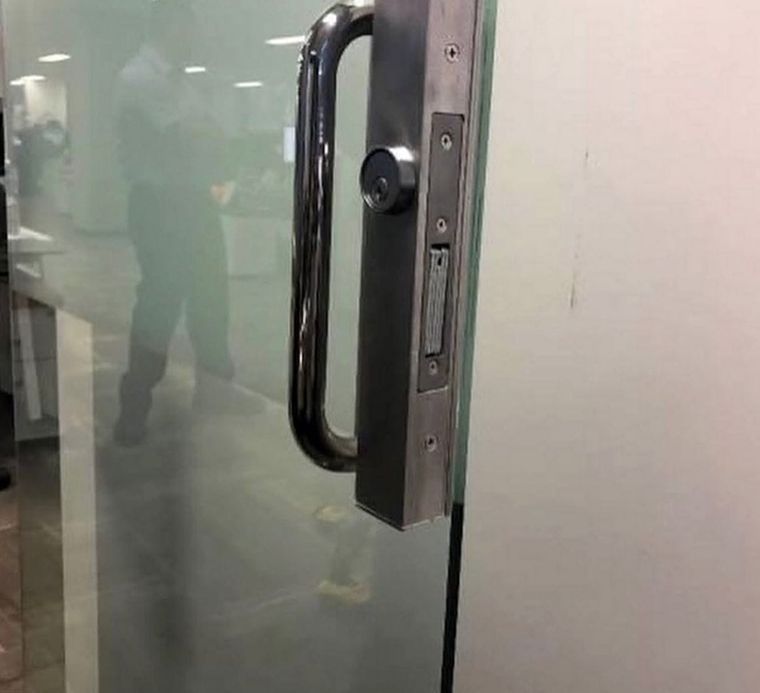
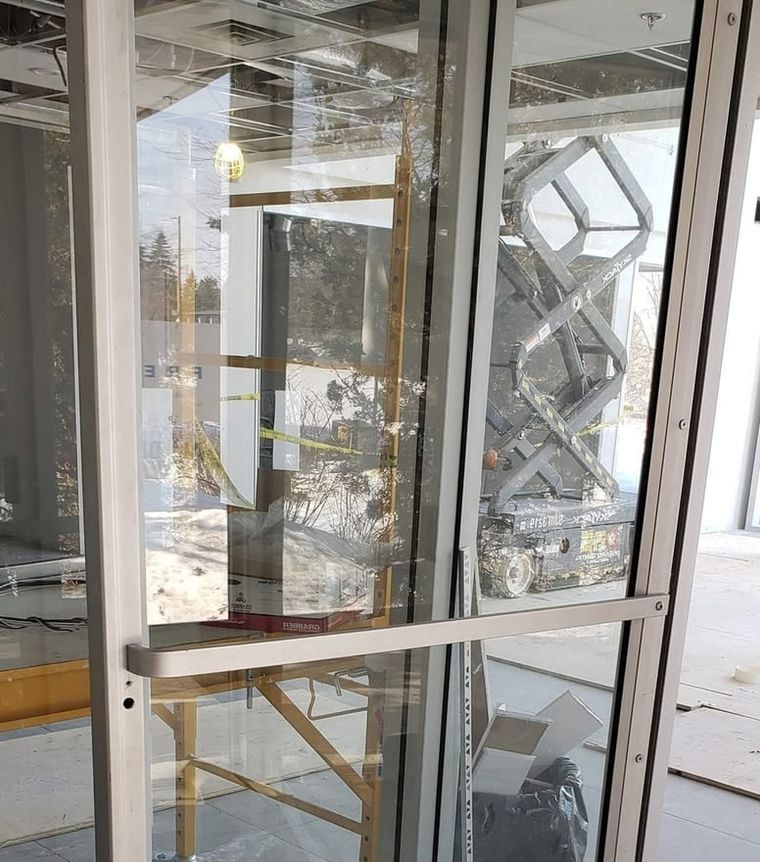
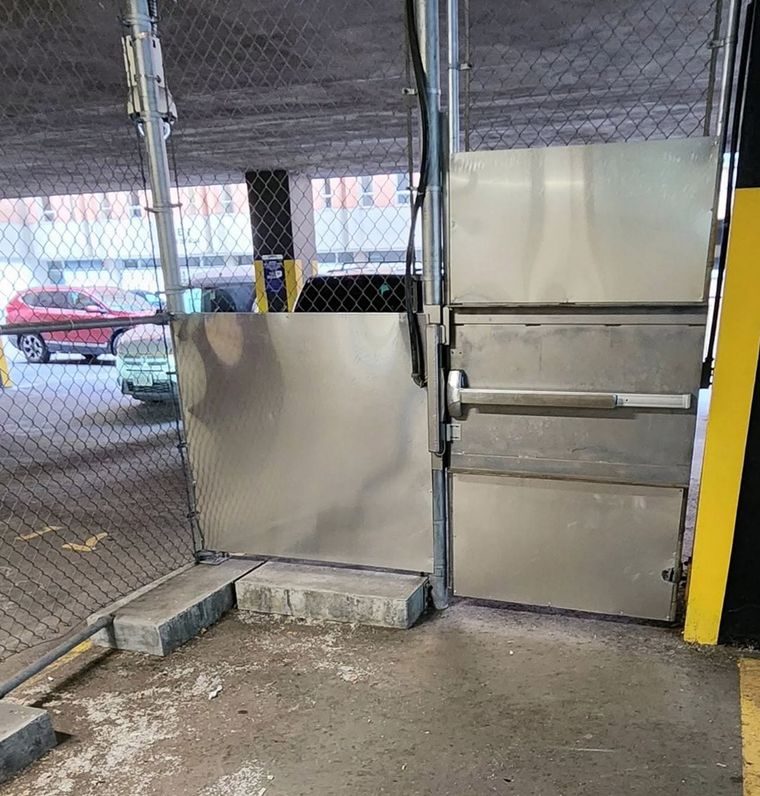
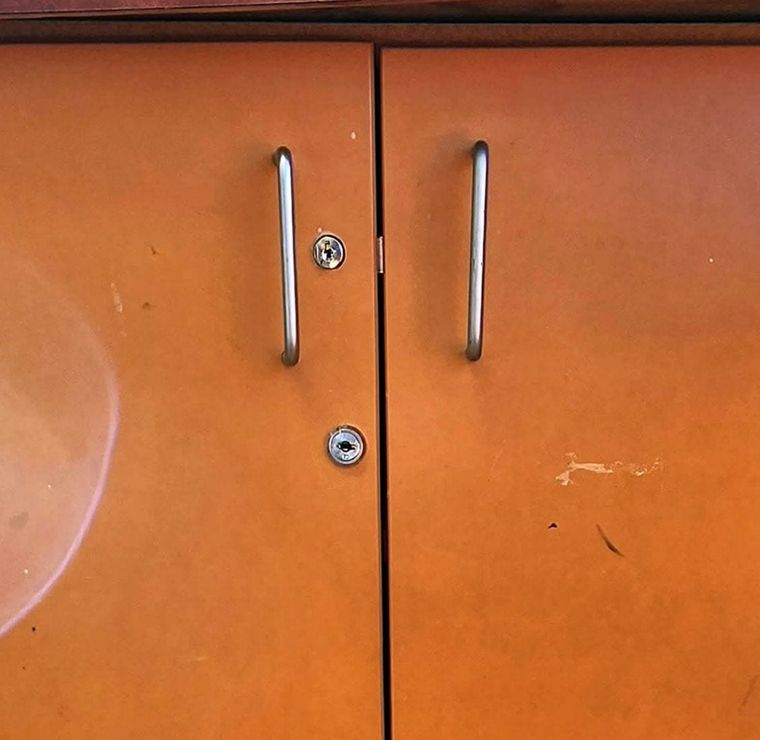
Each piece does a different job. A glass door with no frame to drill takes a lock housing that clamps onto the glass itself, with the cylinder and the bolt inside the housing. A push bar or panic bar lets anyone inside leave with one push while the outside can stay locked, which is why exit devices turn up on storefronts and garage gates alike. Cam locks are the simplest locks there are: a key turns a flat steel cam behind the door, and the cam swings across to hold it shut.
An aluminum storefront door has a narrow frame with little room for a lock, so its hardware is made to fit that frame: a slim cylinder, a bolt shaped like a hook so it grabs the jamb, and a push bar cut to the width of the door. Parts made for a house door do not fit it, and a lock that is forced into the wrong space binds within weeks.
For businesses, the shop’s commercial lock work covers lock changes, panic hardware and exit devices, and keying many doors to a master. In a building with many doors, a master key system lets each person’s key open only the doors it should, while a master key opens them all.
Lockout and Key Work
Two more lines of everyday work round out the shop’s jobs: getting people back inside when the key is lost, snapped or locked in, and cutting the keys that keep them from being locked out again.
Lockouts at Home and at the Curb
Lockout calls come from house and apartment doors, and from drivers who run into key trouble in a parking lot or at the curb. Anyone standing outside a locked door can start with home lockouts.
Spare Keys, Copies and Car Keys
Key work runs from a spare house key to a car key: spares cut, worn keys copied, lost keys replaced and transponder keys programmed to the car. Anyone who needs a copy made or a car key replaced can read up on keys and duplicates first.